
FIRST SIGNS
Seedlings Reaching Toward the Grow Lights
Tiny green declarations that the next season has already begun.
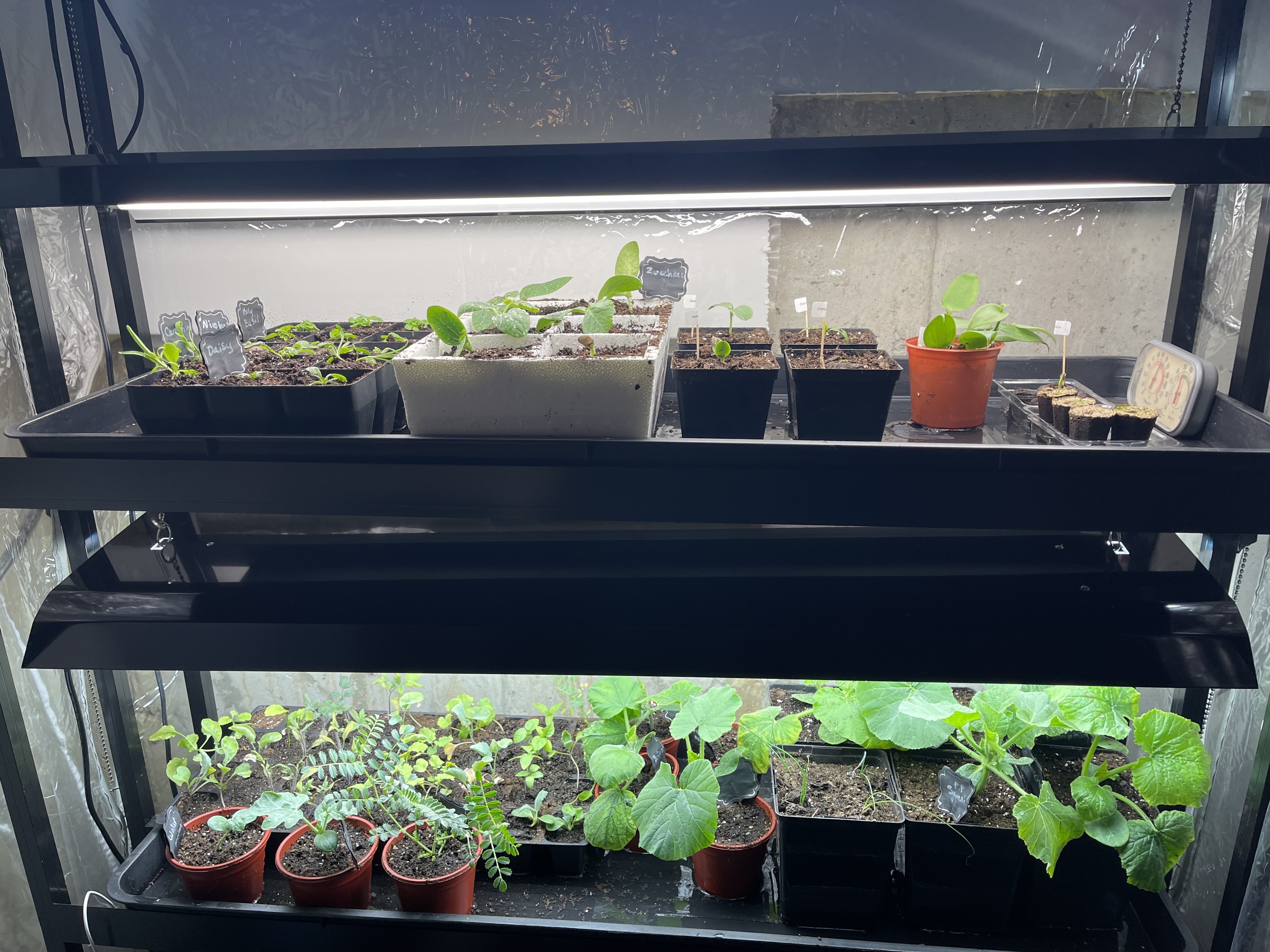
I absolutely love watching new seedlings grow.
Planting them?
That part I could take or leave.
There are so many tiny seeds to keep track of. So many decisions about what to grow, how many of each variety, which tray gets what, and whether I am absolutely certain I will remember which row is which if I don’t write it down immediately.
Spoiler: I will not.
Seed starting can involve a surprising amount of record keeping for something that begins with dropping tiny specks into soil.
How many did I plant?
Which tomato variety was that?
Did I put the peppers in this tray or the other tray?
Did I label this one?
Why didn’t I label this one?
This part can feel less like gardening and more like managing a very small agricultural bureaucracy.
But then they sprout.
And suddenly I remember why I do it.
The Magic Never Gets Old
Every single time I start seeds, there is a part of me that worries they won’t come up.
I know perfectly well that seeds germinate. I have done this for years. I have watched tray after tray come to life.
And still I look at those little pots and wonder.
Are they going to sprout?
Then one morning there is the tiniest loop of green pushing through the soil.
And wow.
It is magic every time.
A day later it is standing a little taller.
Then another appears beside it.
Then the first leaves begin opening.
Within days, what looked like a tray of dirt has become a tiny green forest leaning toward the light.
I never get tired of it.
There is something almost absurdly hopeful about seedlings. They are so small and fragile at first, and yet everything they need to become is already there.
A tomato seed looks like almost nothing.
And somehow it knows how to become a tomato plant.
That will never stop amazing me.
The Many Ways I’ve Started Seeds
I’ve tried quite a few seed-starting methods over the years.
I’ve used soil blocks with soil block makers, newspaper pots, peat pellets, prefilled seed-starting trays where you just add water, and probably a few other systems I’ve forgotten by now.
Some were clever. Some worked beautifully. Some created more steps than I personally wanted.
My favorite method is still the simplest one:
Reusable plant trays filled with seed-starting mix.
Seed-starting mix is usually finer and lighter than ordinary potting soil, which makes it easier for tiny new roots to move through and helps provide the moisture and air balance young seedlings need.
Nothing fancy.
Just trays, seed-starting mix, labels, seeds, water, and light.
Sometimes simple wins.
About Those Plastic Domes
A lot of seed-starting trays come with clear plastic humidity domes.
They are useful at the very beginning because they help keep the seed-starting mix from drying out while seeds are germinating.
I usually leave mine slightly offset rather than sealing them completely so there is at least a little airflow.
And once the seedlings begin sprouting, I remove the dome.
At that point, those tiny plants need airflow more than they need a miniature greenhouse.
Too much moisture combined with poor airflow can contribute to damping off, a frustrating condition where very young seedlings suddenly collapse, often right at the soil line.
One day they look fine.
The next day they are lying flat like someone cut them down with microscopic scissors.
It is heartbreaking.
The best defense is prevention: clean trays, good airflow, careful watering, and not keeping young seedlings constantly soggy.
Why I Prefer Grow Lights
I definitely prefer grow lights to relying on a sunny window.
Window light can be wonderful for established houseplants, but seedlings are tiny little light-seeking machines.
If the light is weak or coming from one direction, they stretch toward it.
That is when you get long, thin, floppy seedlings.
This is often called becoming leggy.
Grow lights give them much more consistent light directly overhead, so the seedlings grow straighter and sturdier.
Full-spectrum grow lights are ideal if you have them, but the most important thing is that the light is bright enough and close enough to the seedlings.
One of the most common mistakes with grow lights is putting them too far away.
If the seedlings are stretching dramatically upward, they are usually asking for more light.
Depending on the type and strength of the light, I generally want the lights fairly close to the tops of the seedlings while making sure they are not getting hot enough to damage them.
A Few Things That Have Helped Me
Keep the soil evenly moist, not soaked.
Seeds need moisture to germinate, but young roots also need air. Constantly waterlogged soil can create problems quickly.
Label everything immediately.
Do not trust Future You to remember which tomato was planted in row three.
Future You has other things going on.
Give seedlings airflow.
Once seeds sprout, gentle air movement helps keep conditions from becoming stagnant. A small fan on a low setting can also encourage sturdier stems.
Keep the light close.
Seedlings will tell you very quickly when they need more light. If they start stretching, adjust.
Rotate trays if needed.
If one side is growing faster or leaning, rotate the tray so growth stays more even.
Don’t rush fertilizer.
Very young seedlings usually do not need much feeding immediately. Once they have developed their first true leaves and are actively growing, a diluted fertilizer can be introduced depending on the growing medium you are using.
Learn the difference between seed leaves and true leaves.
The first little leaves you see are usually cotyledons, or seed leaves. The leaves that come after them are the plant’s first true leaves, and they begin to look more like the mature plant.
That transition is another one of my favorite parts to watch.
Then Suddenly, They Look Like Plants
There is always a point where the tray changes.
At first you are watching sprouts.
Then, almost without noticing exactly when it happened, you realize you are looking at actual plants.
Leaves are unfolding.
Roots are filling the cells.
Some seedlings are clearly stronger than others.
Tomatoes start looking unmistakably like tomatoes.
Peppers look like peppers.
The whole tray begins taking on personalities.
And every morning I find myself checking them.
What changed overnight?
Who grew?
Who needs water?
Who is reaching toward the grow lights?
It is such a small thing, really.
A tray of seedlings.
But there is something deeply satisfying about watching life begin that visibly.
Especially when the world outside still looks like winter.
Because once those tiny green leaves begin pushing upward, the season has already started changing.
Maybe not outside yet.
But here, under the grow lights, spring has already begun.